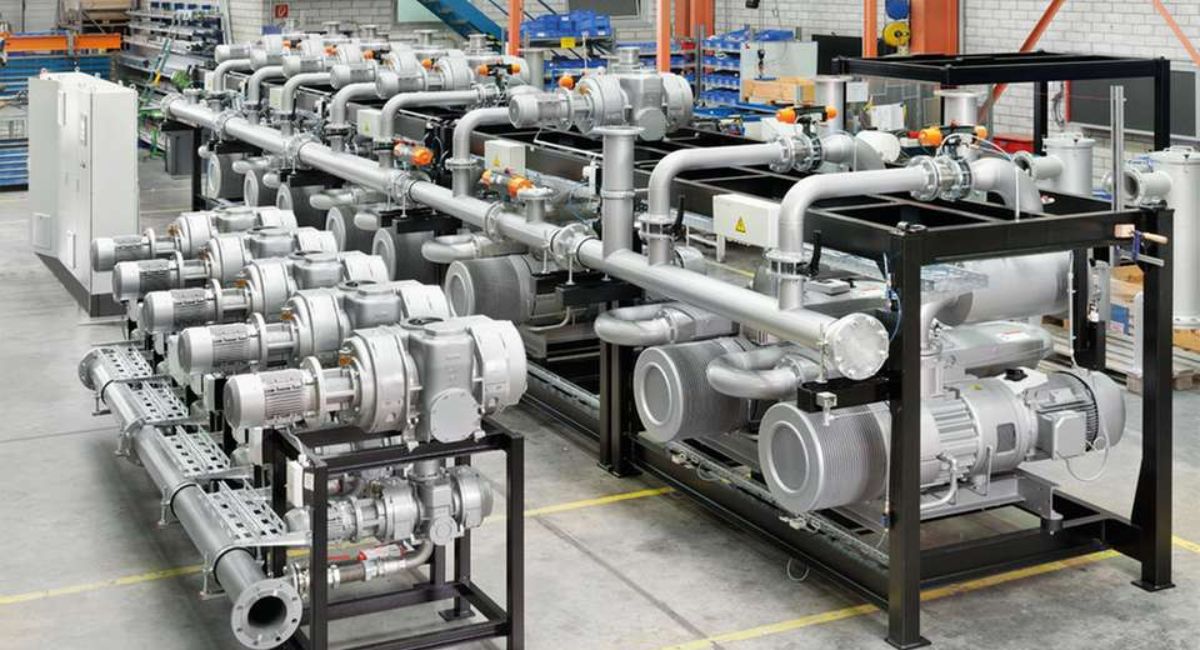
Vacuum technology is one of the invisible forces driving modern civilization. While it may not be something most people think about daily, it plays a crucial role in industries ranging from electronics and healthcare to aerospace and advanced scientific research.
By controlling pressure and reducing the presence of gases, vacuum technology enables levels of precision, cleanliness, and performance that are impossible under normal atmospheric conditions.
As industries push toward smaller, faster, cleaner, and more efficient systems, vacuum technology continues to evolve. From semiconductor fabrication plants to space simulation chambers, its applications are expanding rapidly.
This article provides a comprehensive exploration of vacuum technology—its fundamental principles, key components, industrial and scientific applications, and the innovations that will define its future.
Understanding the Fundamentals of Vacuum Technology
Vacuum technology is centered on the creation, measurement, and maintenance of environments where gas pressure is lower than standard atmospheric pressure. Atmospheric pressure at sea level is approximately 101,325 pascals, and any pressure below this value is technically considered a vacuum.
What Is a Vacuum?
A vacuum is not an absolute absence of matter, as a perfect vacuum is nearly impossible to achieve. Instead, it refers to a space where the density of gas molecules is significantly reduced. The fewer gas molecules present, the lower the pressure and the “stronger” the vacuum.
Vacuum environments allow scientists and engineers to:
Minimize contamination
Reduce chemical reactions with air
Control particle movement
Improve accuracy and reproducibility
Classification of Vacuum Levels
Vacuum levels are categorized based on pressure ranges, each serving different applications:
Low Vacuum: Used in packaging, HVAC systems, and simple industrial processes
Medium Vacuum: Common in chemical processing and laboratory filtration
High Vacuum: Essential for thin-film deposition and electron microscopy
Ultra-High Vacuum (UHV): Required in surface science and particle physics
Extreme High Vacuum (XHV): Used in cutting-edge research environments
Each level demands specialized equipment and strict system design to maintain stability and performance.
Gas Behavior Under Vacuum
As pressure decreases, gas molecules collide less frequently. This change in molecular behavior impacts heat transfer, chemical reactions, and mechanical motion.
Understanding these dynamics is essential when designing vacuum systems for sensitive processes such as semiconductor manufacturing or analytical chemistry.
Key Components of Modern Vacuum Systems
A vacuum system is a carefully engineered assembly of components working together to achieve and sustain low-pressure conditions. The performance of the entire system depends on the quality and compatibility of each part.
Vacuum Pumps
Vacuum pumps are the heart of any vacuum system. Their function is to remove gas molecules from a chamber.
Common types include:
Rotary vane pumps for low and medium vacuum
Turbomolecular pumps for high and ultra-high vacuum
Diffusion pumps for industrial high-vacuum applications
Cryogenic pumps for extremely clean and deep vacuum levels
Each pump type operates on different physical principles and is chosen based on pressure requirements and application demands.
Vacuum Chambers
Vacuum chambers provide the enclosed environment where processes occur. These chambers are typically made from stainless steel or aluminum due to their low outgassing properties and mechanical strength.
Design considerations include:
Shape and volume
Surface finish
Material purity
Accessibility for maintenance
Measurement and Control Instruments
Accurate monitoring is essential in vacuum systems. Pressure gauges such as Pirani gauges, ion gauges, and capacitance manometers provide real-time feedback. Control systems regulate pump operation, valves, and safety mechanisms.
Valves, Seals, and Materials
Vacuum integrity depends heavily on seals and materials. Even microscopic leaks can compromise system performance. Elastomer seals are used in low vacuum, while metal seals dominate ultra-high vacuum environments.
Role of Vacuum Technology in Analytical and Laboratory Processes
Modern laboratories rely on vacuum technology to achieve precise, reproducible results. Many analytical techniques require contamination-free environments and controlled molecular movement.
Sample Preparation and Purification
Before analysis, samples must often be isolated and purified. Solid-phase extraction (SPE) is a widely used technique that benefits from vacuum assistance.
High-quality SPE tools, such as those produced by Shimadzu, are designed to work seamlessly with vacuum manifolds, ensuring consistent flow rates and accurate compound separation.
Enhancing Analytical Accuracy
Vacuum conditions improve the reliability of:
Mass spectrometry
Gas chromatography
Electron microscopy
By minimizing interference from air molecules, instruments can detect compounds at extremely low concentrations.
Industrial Applications of Vacuum Technology
Vacuum technology is a backbone of modern industrial production. Its ability to create clean, controlled environments makes it indispensable in multiple sectors.
Semiconductor and Electronics Manufacturing
The electronics industry depends heavily on vacuum systems. Semiconductor fabrication requires ultra-clean environments where even a single dust particle can ruin an integrated circuit.
Vacuum technology supports:
Thin-film deposition
Plasma etching
Ion implantation
Nanostructure fabrication
Without vacuum systems, modern microprocessors and memory chips would not exist.
Coating and Surface Engineering
Vacuum-based coating techniques such as Physical Vapor Deposition (PVD) and Chemical Vapor Deposition (CVD) are widely used to enhance durability, conductivity, and corrosion resistance.
Applications include:
Cutting tools
Optical lenses
Medical implants
Automotive components
Medical and Pharmaceutical Industries
In healthcare, vacuum technology enables:
Freeze-drying of pharmaceuticals
Vacuum sterilization of medical instruments
Production of high-purity compounds
Freeze-drying preserves drug stability and extends shelf life without damaging sensitive ingredients.
Food Processing and Packaging
Vacuum packaging slows oxidation and microbial growth, preserving freshness and flavor. Freeze-drying technology also allows food to retain nutrients while becoming lightweight and shelf-stable.
Vacuum Technology in Scientific Research
Scientific discovery would be severely limited without vacuum technology. Many advanced research tools require controlled low-pressure environments.
Physics and Material Science
Particle accelerators, surface analysis instruments, and plasma research facilities rely on ultra-high vacuum systems to study fundamental physical phenomena.
Astronomy and Space Simulation
Space simulation chambers recreate the vacuum of outer space, allowing engineers to test spacecraft components under realistic conditions before launch.
Chemistry and Nanotechnology
Vacuum environments allow precise control of reactions and enable the study of materials at atomic and molecular scales.
Environmental and Energy Applications
Vacuum technology also contributes to sustainability and energy efficiency.
Renewable Energy Manufacturing
Solar panels and advanced batteries require vacuum-based coating and processing techniques to achieve high efficiency and long lifespans.
Waste Reduction and Recycling
Vacuum distillation and separation processes help recover valuable materials while minimizing waste and energy consumption.
Challenges in Vacuum Technology
Despite its advantages, vacuum technology presents challenges.
Energy Consumption
Large-scale vacuum systems can consume significant energy. Improving efficiency remains a major focus for manufacturers.
System Complexity
Designing and maintaining leak-free systems requires specialized expertise and rigorous quality control.
Cost Considerations
High-vacuum and ultra-high vacuum systems involve substantial initial investment, though long-term benefits often outweigh costs.
Future Trends and Innovations in Vacuum Technology
As technology advances, vacuum systems are becoming smarter, smaller, and more efficient.
Energy-Efficient Pump Designs
Next-generation pumps aim to reduce power consumption without compromising performance.
Smart Vacuum Systems
Integration with IoT sensors allows real-time monitoring, predictive maintenance, and automated optimization.
New materials with ultra-low outgassing properties improve system stability and longevity.
Expansion into Emerging Fields
Vacuum technology is increasingly important in:
Quantum computing
Advanced nanofabrication
Space exploration missions
Frequently Asked Questions
What is vacuum technology used for?
Vacuum technology is used to create low-pressure environments for manufacturing, scientific research, electronics, healthcare, and food processing.
Why is vacuum important in semiconductor manufacturing?
Vacuum prevents contamination and enables precise control during processes like thin-film deposition and etching.
Is a perfect vacuum possible?
A perfect vacuum is theoretically impossible, but extremely low-pressure environments can be achieved with advanced systems.
How does vacuum technology improve laboratory accuracy?
By removing air molecules, vacuum reduces interference and allows instruments to detect substances with high precision.
What is the future of vacuum technology?
Future developments include energy-efficient pumps, smart monitoring systems, miniaturized components, and applications in emerging technologies.
Conclusion
Vacuum technology is a foundational pillar of modern science, engineering, and industry. Its ability to create controlled, contamination-free environments enables everything from microchip production to space exploration. As industries demand higher precision and cleaner processes, the importance of vacuum systems continues to grow.
Looking ahead, innovations in energy efficiency, smart automation, and advanced materials will further expand the reach of vacuum technology. As a silent but powerful enabler, it will remain at the core of technological progress, shaping the future of manufacturing, research, and exploration for decades to come.