Three interlocked triangles—simple in shape, yet deeply powerful in meaning. This ancient symbol, known as the Valknut, continues to fascinate people across the world, especially in the United States, where Norse culture has seen a revival through history, tattoos, fashion, and pop culture.
At first glance, the Valknut appears purely geometric, but beneath its sharp lines lies a story of warriors, gods, fate, and the eternal cycle of existence.
The Valknut symbol is strongly associated with Viking mythology and Norse beliefs about life, death, and the afterlife. Found carved on runestones, burial artifacts, and ancient memorials, it served as more than decoration—it was a spiritual marker.
Today, the Valknut has crossed centuries, evolving from a sacred Viking emblem into a modern symbol of strength, identity, love, and transformation.
In this detailed guide, we will uncover the hidden meaning behind the Valknut symbol, explore its historical roots, understand its connection to Odin, analyze its symbolism, and examine why it still resonates so strongly in modern culture.
The Valknut is one of the most mysterious symbols from Norse mythology. Its name is derived from two Old Norse words: valr, meaning “slain warriors,” and knut, meaning “knot.” Together, the term roughly translates to “knot of the slain,” which immediately hints at its deep association with death and the afterlife.
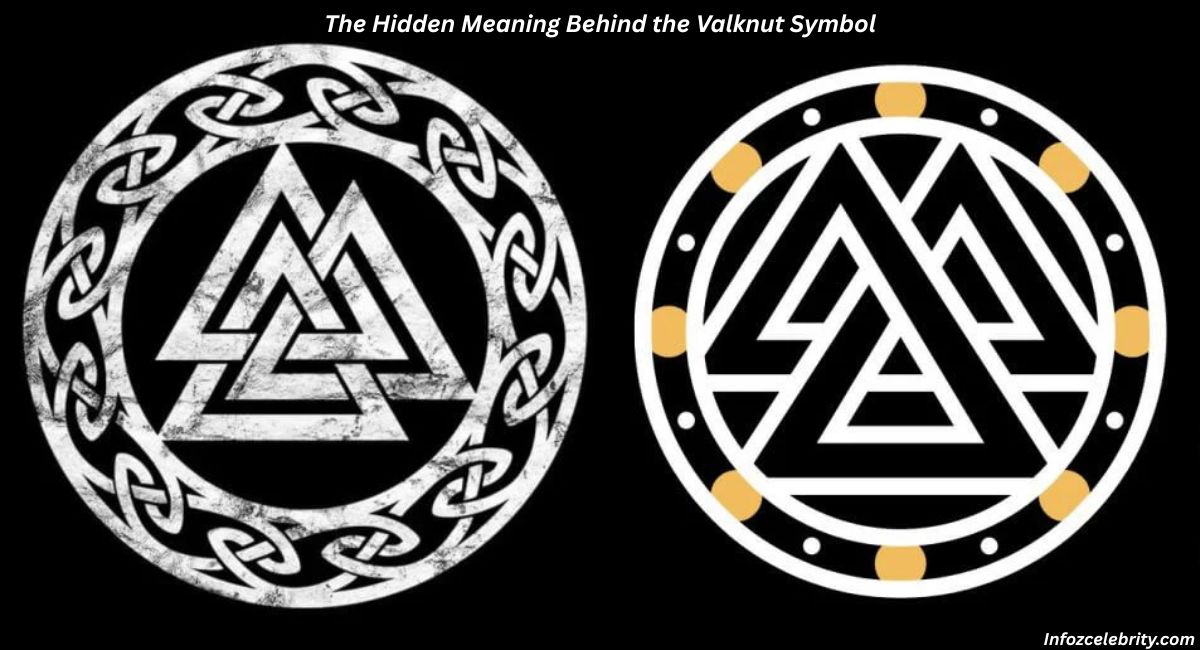
Visually, the Valknut consists of three interlocking triangles, sometimes drawn as separate triangles overlapping, and sometimes as a continuous, single-line knot. This visual complexity adds to its mystical appeal, making it a favorite among historians, artists, and tattoo enthusiasts alike.
For modern audiences—especially Americans fascinated by Viking heritage—the Valknut represents courage, destiny, and spiritual connection. But to truly understand it, we must journey back to its origins.
Historical Background of the Valknut
The Valknut originates from the Viking Age, roughly between the 8th and 11th centuries. Archaeological evidence shows that the symbol appeared across Scandinavia, particularly in Sweden, Norway, and Denmark.
One of the most famous examples is the Ramsund Carving in Sweden, where the Valknut appears alongside scenes from Norse legend. Another significant discovery is the Tängelgarda Stone on the island of Gotland, which depicts warriors, animals, and ritual imagery, with the Valknut prominently featured.
The symbol also appears in burial contexts, suggesting a spiritual or ceremonial role. Vikings believed deeply in the afterlife, especially Valhalla—the great hall where fallen warriors were welcomed by Odin. The Valknut’s presence in graves strongly implies a connection to this belief system.
Understanding the Valknut Symbolism
The power of the Valknut lies in its symbolism. Each element of its design contributes to its deeper meaning.
The Power of Three
In Norse mythology, the number three is sacred. It appears repeatedly:
The Three Norns (Urd, Verdandi, Skuld) who control fate
The Three Roots of Yggdrasil, the world tree
The division of time into past, present, and future
The Valknut’s three triangles reflect this sacred structure, symbolizing cosmic balance and destiny.
Interlocking Triangles
The interwoven nature of the triangles represents interconnection—between life and death, humans and gods, body and spirit. Nothing exists alone; everything is bound together.
The Meaning of the Valknut Symbol
At its core, the Valknut is a symbol of death with honor. It marks the transition from mortal life to the spiritual realm. For Vikings, death in battle was not an end but a passage to glory.
The Valknut also symbolizes:
Courage in the face of death
Acceptance of fate
Transformation and rebirth
Spiritual awakening
In modern times, many people interpret the Valknut more personally—as a reminder of inner strength, resilience, and life’s cyclical nature.
Odin and the Valknut Connection
No discussion of the Valknut is complete without mentioning Odin, the chief god of Norse mythology. Odin was the god of war, wisdom, death, poetry, and magic. He ruled Valhalla and decided which warriors would be taken there after death.
The Valknut is frequently found near images associated with Odin, such as ravens, wolves, and warriors. Many scholars believe the symbol represents Odin’s power to bind and release souls.
Odin’s legendary sacrifice—hanging himself on Yggdrasil for nine nights to gain wisdom—mirrors the Valknut’s themes of sacrifice, death, and rebirth. This connection strengthens the belief that the Valknut served as a sacred mark of Odin’s chosen.
Modern Interpretations of the Valknut
Today, the Valknut has taken on new meanings while retaining its ancient essence. Modern interpretations include:
Strength and resilience
Spiritual awareness
Personal transformation
Connection to ancestry
For many Americans, the Valknut represents a link to Norse heritage or admiration for Viking values such as honor, bravery, and loyalty.
The Valknut in Modern Culture
The Valknut has become highly visible in modern media and lifestyle culture. It appears in:
Movies and TV shows about Vikings
Video games like Assassin’s Creed Valhalla
Jewelry, clothing, and home décor
Tattoos symbolizing identity and strength
Its bold design and deep meaning make it a powerful symbol in contemporary art and fashion.
Symbol of Love: The Emotional Side of the Valknut
While often associated with death and warriors, the Valknut also carries an emotional meaning. The interlocking triangles symbolize unbreakable bonds—between lovers, family members, or close companions.
Some couples choose the Valknut as a symbol of eternal commitment, representing love that transcends time and even death. In this way, the Valknut becomes not just a warrior’s mark, but a symbol of loyalty and unity.
Exploring Other Interpretations of the Valknut
Beyond traditional Norse beliefs, alternative interpretations exist:
Universal balance, similar to knot symbols found in other cultures
These interpretations suggest that the Valknut’s meaning is not fixed—it evolves with the individual who embraces it.
The Valknut in Art and Tattoos
Artists and tattoo enthusiasts are drawn to the Valknut for its symmetry and symbolism. Popular tattoo styles include:
Minimalist black line designs
Nordic-themed artwork with runes and ravens
Geometric and modern interpretations
For many, a Valknut tattoo is a lifelong reminder of strength, sacrifice, and personal growth.
Comparisons with Other Norse Symbols
The Valknut holds a unique place among Norse symbols:
Symbol
Meaning
Valknut
Death, fate, transformation
Mjolnir
Protection, power, strength
Yggdrasil
Life, connection, cosmos
Vegvisir
Guidance and direction
Each symbol reflects a different aspect of Norse belief, but the Valknut stands out for its spiritual depth.
The Valknut in Archaeological Discoveries
Archaeological findings consistently link the Valknut with death rituals and warrior culture. Its appearance on grave markers and memorial stones suggests it was used to honor the fallen and guide souls to the afterlife.
These discoveries confirm that the Valknut was not merely decorative—it was deeply sacred.
Myths and Legends Surrounding the Valknut
Many Norse legends suggest the Valknut held magical properties. Some believed it allowed Odin to bind warriors’ minds, inspiring fear or courage. Others believed it marked those destined for Valhalla.
These myths add to the Valknut’s aura of mystery and divine power.
How to Embrace the Valknut Symbol Today
If you feel drawn to the Valknut, there are many ways to connect with it:
Wearing it as jewelry
Using it as a meditation focus
Displaying it in art or décor
Getting a tattoo as a personal symbol
Embracing the Valknut is a way to honor strength, fate, and transformation.
Common Misinterpretations of the Valknut
Unfortunately, the Valknut is sometimes misunderstood. Some believe it is a symbol of negativity or extremism, which is incorrect. Historically, it represents honor, spirituality, and transition—not hate or violence.
Understanding its true roots is essential to respecting its legacy.
Conclusion
The Valknut symbol is far more than three interlocked triangles. It is a powerful emblem rooted in Viking history, Norse mythology, and spiritual philosophy. From honoring fallen warriors to representing fate, transformation, and unity, the Valknut carries meanings that transcend time.
For modern audiences, especially in the United States, the Valknut serves as a bridge between ancient wisdom and contemporary identity. Whether worn as jewelry, inked as a tattoo, or studied as history, it continues to inspire curiosity and respect.
FAQs
What is the meaning of the Valknut symbol?
The Valknut represents life, death, and rebirth. It is closely linked to fallen warriors and the journey to Valhalla.
How is the Valknut connected to Odin?
The Valknut is associated with Odin, who ruled over Valhalla and chose fallen warriors. It symbolizes his power over life and death.
What does the Valknut symbolize in modern culture?
Today, it represents strength, resilience, heritage, and personal transformation.
Is the Valknut a symbol of love?
Yes, its interlocking design can symbolize unbreakable bonds, loyalty, and eternal connection.
Are there alternative interpretations of the Valknut?
Some interpret it as a symbol of fertility, balance, or psychological transformation beyond its warrior roots.